Laboratorio y Protocolos de Seguridad EN71 y ASTM F963
Todo lote producido por WishTime Toys se somete a ensayos de impacto, tracción mecánica, combustión y migración química según directivas internacionales antes de su embarque.
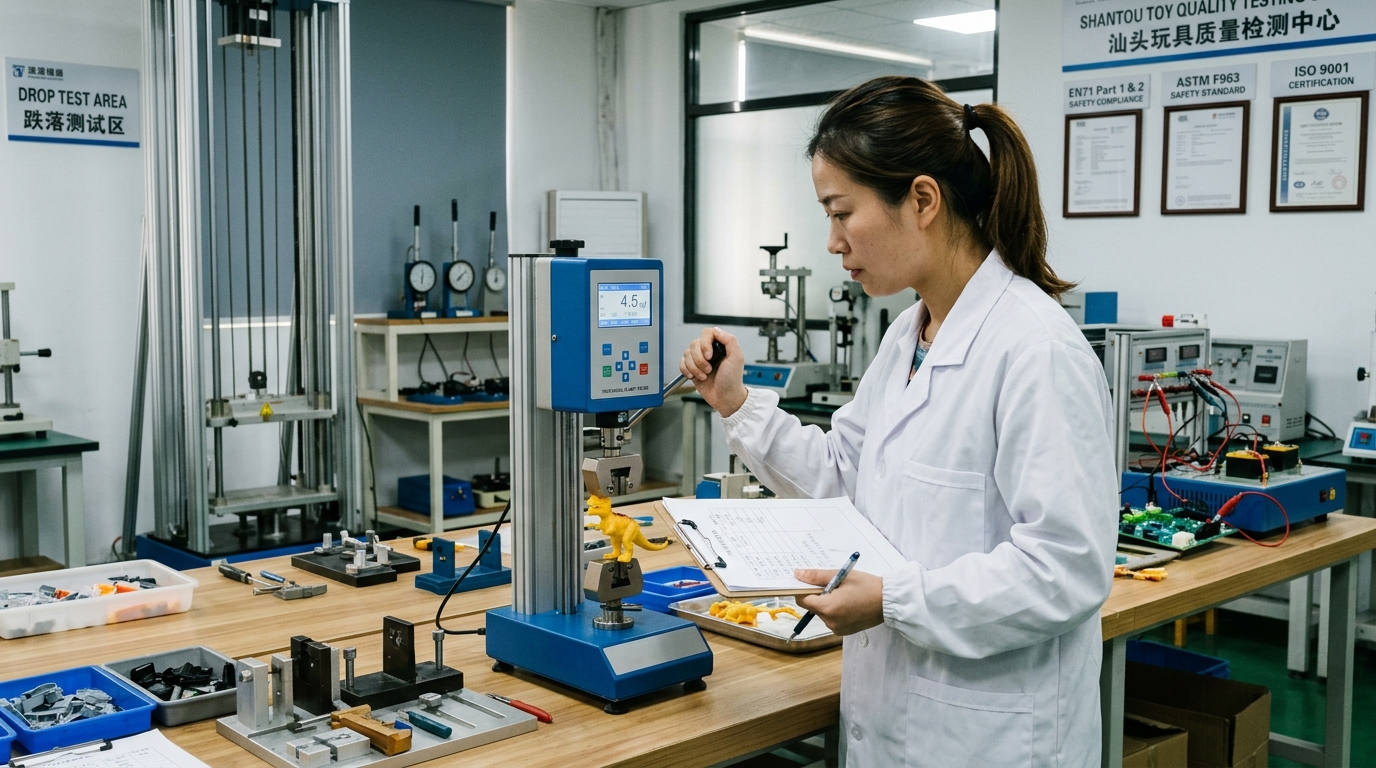
In-House Physical Safety & Stress Testing Lab
Children's safety is non-negotiable. That is why WishTime Toys maintains an in-house laboratory equipped with identical testing apparatus used by third-party testing houses such as SGS and Intertek.
Before any batch is packed into master shipping cartons, random production samples are subjected to destructive drop tests from 1.5 meters onto hardened steel, small parts tension pull tests, seam torque simulations, and decibel sound measurements.
Standards We Manufacture To
Our products are engineered and tested to comply with consumer protection standards across major export markets.
European Toy Safety Standard
EU Directive 2009/48/ECOur manufacturing and QC protocols verify conformity across all three essential parts under European Commission Toy Directives:
- EN 71-1: Physical and mechanical tests including impact, tensile stress, sharp edges, and small parts for children under 36 months.
- EN 71-2: Flammability verification ensuring materials have low burn propagation speeds and self-extinguish.
- EN 71-3: Chemical migration testing for 19 toxic heavy metals (lead, cadmium, mercury, chromium, arsenic, etc.).
ASTM F963-23 & CPSIA
United States Consumer SafetyRequired by US Customs and U.S. CPSC for all toy imports entering the North American market:
- Total Lead Content: Strictly less than 90 ppm in paint coatings and 100 ppm in accessible substrates.
- Phthalate Restrictions: Zero prohibited plasticizers (DEHP, DBP, BBP, DINP, DIBP, DPENP, DHEXP, DCHP).
- Children's Product Certificate (CPC): Issued based on accredited test lab results from SGS, Intertek, or TÜV.
Custom Squishy Toys & Squeeze Series
Slow-Rising Memory Foam & Food-Grade Soft TPR
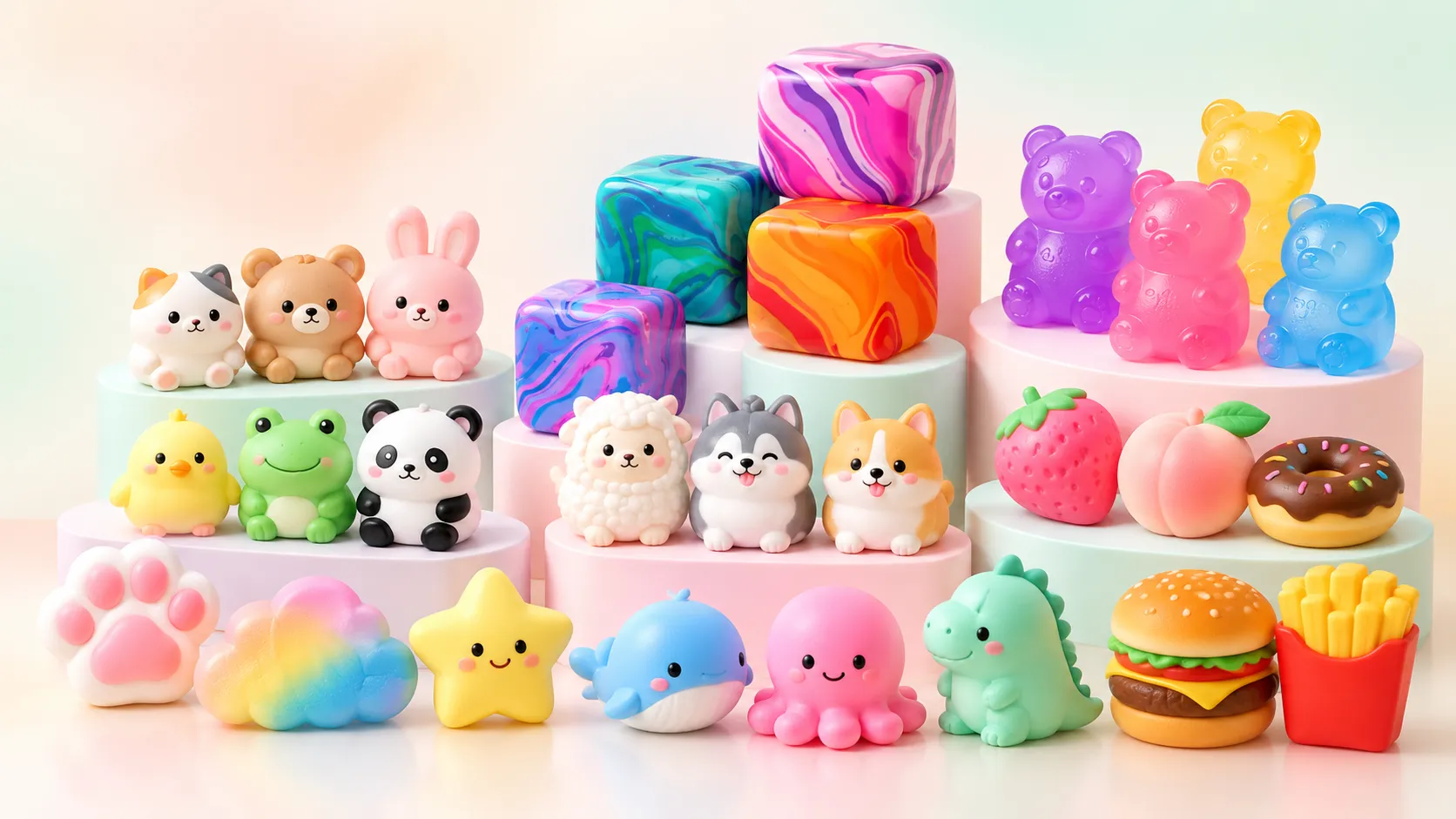
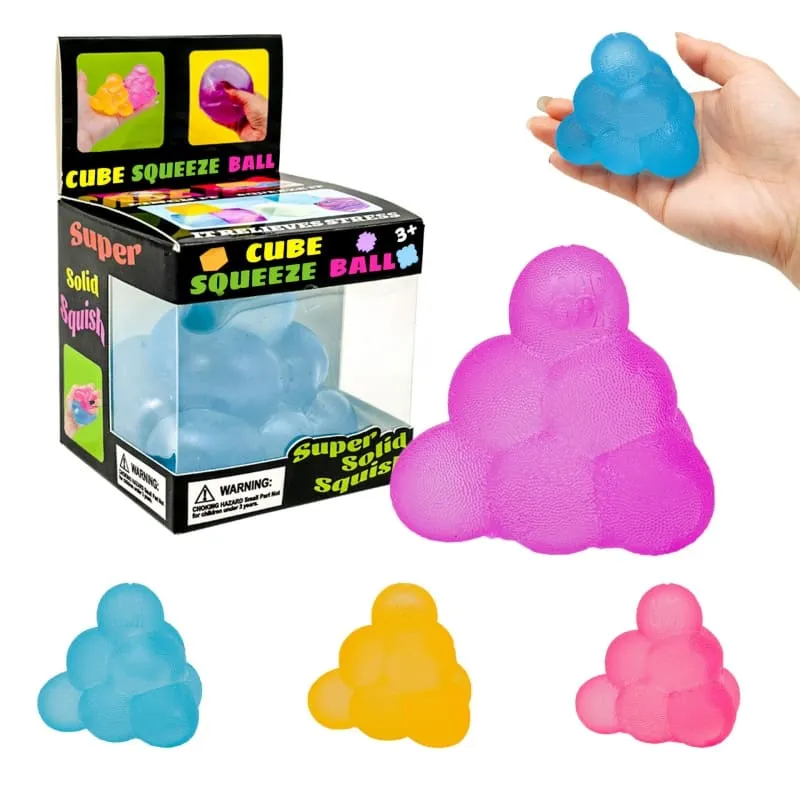
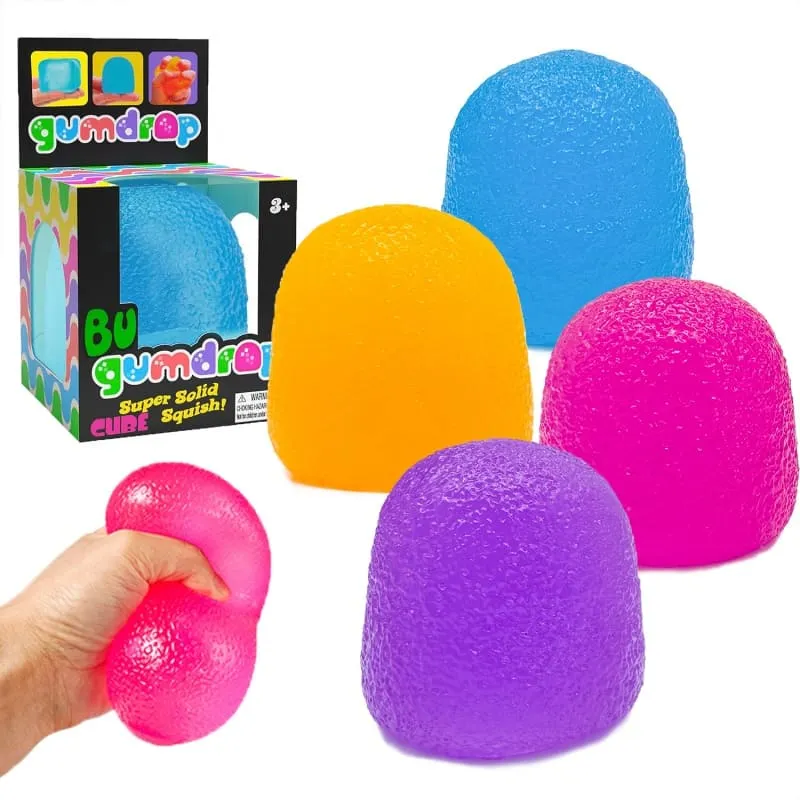
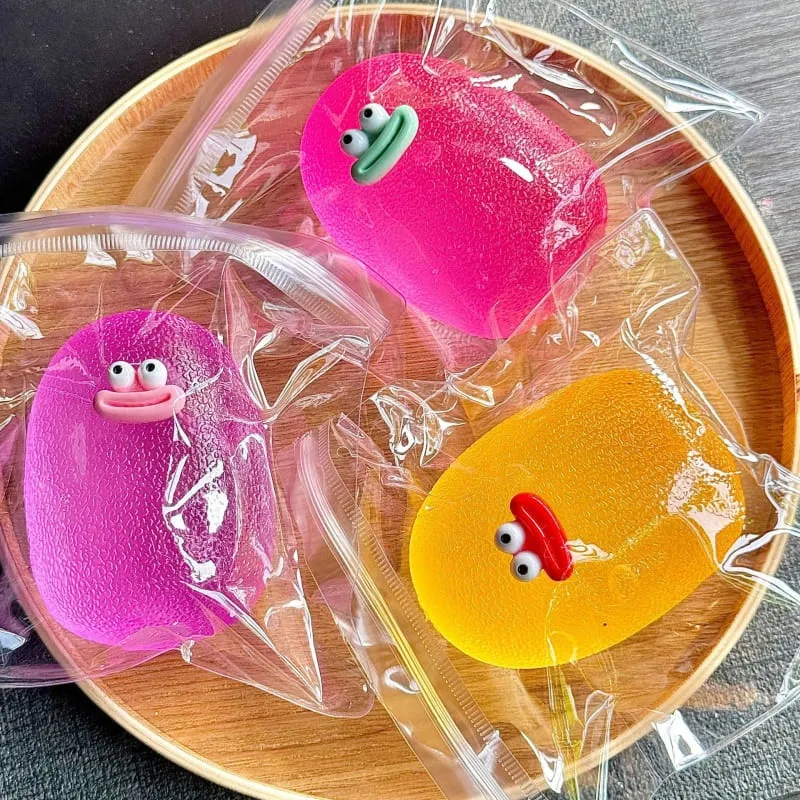
WishTime Toys operates dedicated PU continuous foaming lines and dust-free TPR injection workshops in Chenghai. Engineered for Amazon top sellers, impulse toy racks, and boutique chains with zero oily leakage, 8–12 second memory rebound, and certified compliance.